
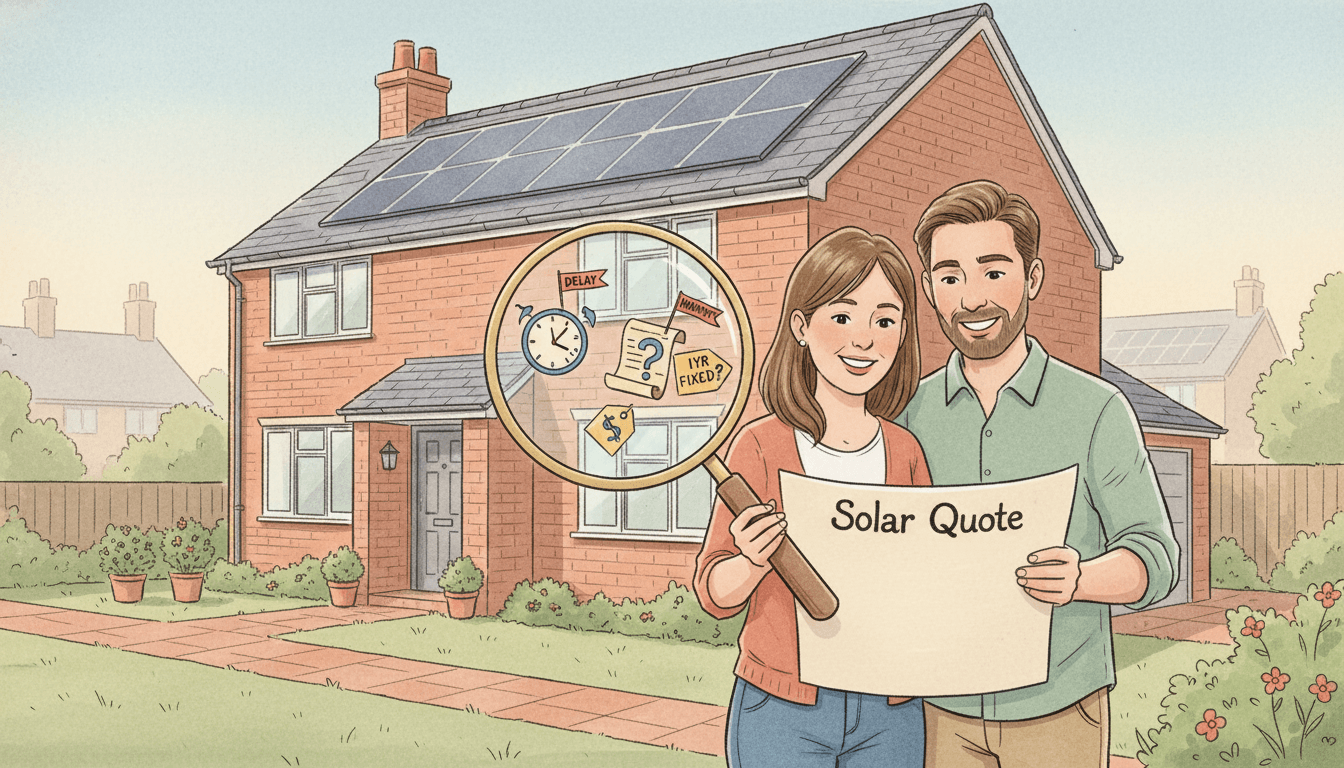
TL;DR
Be wary of quotes with vague kit specs, pressure to sign on the day, and no mention of MCS certification. Payback varies by system size, usage and tariff, so treat unusually short claims with caution. Always ask who is actually installing the system — employed engineers or a crew of sub-contractors.
You've got a few solar quotes in hand. Now comes the hard part: figuring out which one is solid and which one is hiding problems. A good quote is clear, detailed, and leaves no room for doubt. A bad one is full of red flags.
The 'special one-day' discount
This is the oldest sales trick in the book. If a quote is only valid if you sign there and then, it's not a quote — it's a pressure tactic. The price of solar panels doesn't fluctuate that fast.
A reputable installer gives you a written quote that's valid for at least 14 days. This gives you time to compare, check details, and make a decision without someone breathing down your neck. The "manager's special discount" is rarely special.
Vague kit, vague promises
Does the quote list "12 x premium tier-1 solar panels"? That means nothing. It should specify the exact make and model, like "12 x AIKO AIKO-A-MAH54Mb 470W N-Type". The same goes for the inverter and battery — is it a Growatt, a SolaX, a Tesla Powerwall?
Without model numbers, you can't compare quotes like-for-like or verify that you're getting what you paid for. We list every single component, right down to the mounting system.
A payback period from fantasy land
Solar can pay for itself over time, but not overnight. Payback varies by system size, usage and tariff. If a quote claims a very short payback period, check the maths. They are likely using wildly optimistic assumptions about future electricity price rises or ignoring small details like panel degradation.
For a realistic breakdown of the numbers, our guide on whether solar panels are worth it is a good place to start. A good quote will show you the workings, not just a headline number.
Who's actually on your roof?
Many national solar companies are sales operations that sub-contract the actual installation. This can lead to a messy blame game if something goes wrong. Ask the question directly: "Will your own employees be installing my system?"
We use our own employed, trained engineers for every job across Surrey, Sussex, and the south of England. It means we're fully accountable for the quality of the work from survey to sign-off.
Check the MCS paperwork
This one matters. If the installer cannot show relevant MCS paperwork, check the details carefully before you sign. Many Smart Export Guarantee providers ask for MCS evidence before paying for exported energy.
Your warranties may also be affected. Ask installers to show current certification and consumer-protection documents before you sign.
Fuzzy warranty details
You should see two clear warranties on any quote:
- Manufacturer warranty: This covers the hardware itself. Many panels have long performance warranties, with exact terms varying by product.
- Workmanship warranty: This covers the installation quality — the bits the installer is directly responsible for.
A quote that just says "fully warrantied" is a red flag. Our quotes clearly state the manufacturer warranty documents that apply and our own 2-year workmanship guarantee.
What a good quote looks like
A good quote gives you clarity, not a headache. It should be a detailed document you can actually use to make a decision. If you'd like a quote with no surprises, where every component is listed and the price doesn't change, get in touch for a free survey.