
TL;DR
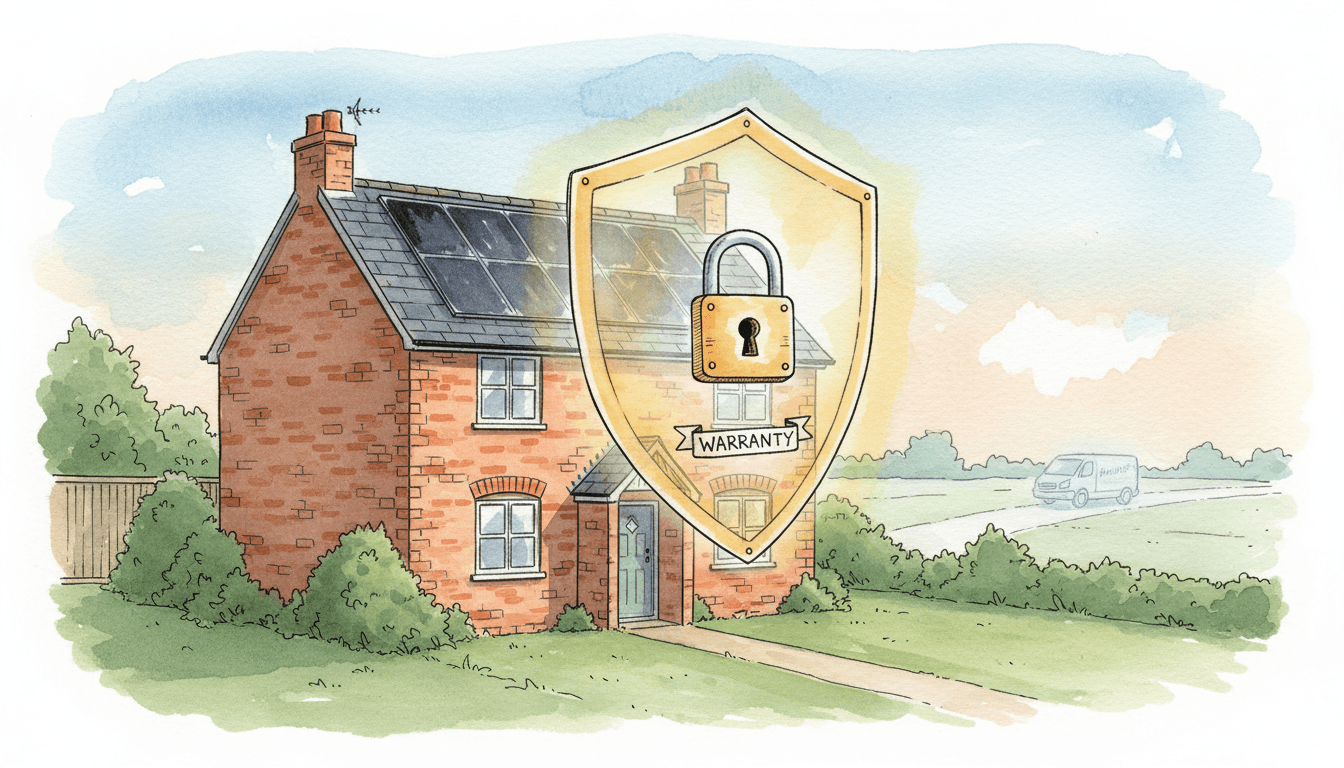
Your panel and inverter warranties are with the manufacturer, but your workmanship guarantee disappears if the installer goes bust. An insurance-backed guarantee through HIP is crucial to protect your deposit and workmanship warranty. Always check your installer has financial protection in place, not just MCS certification.
It's a fair question. You're investing in a system that should last for 25 years, but what if the company that fitted it doesn't?
Two warranties, two companies
A solar installation comes with two distinct warranties. First, there's the manufacturer's warranty on the equipment itself — typically 25 years for panels like the AIKO or LONGi models we use, and 10-12 years for the inverter. If a panel fails, the manufacturer is responsible.
Second, there's the workmanship warranty from your installer. This covers the quality of the installation itself: the mounting, the wiring, the weatherproofing. Ours is a 2-year warranty. If a roof tile leaks because of a poorly fitted bracket, that's on the installer. If the installer ceases trading, that warranty vanishes.
MCS isn't consumer protection
Many people think MCS certification is all the protection they need. It's essential — without it, your installation isn't compliant and you can't get paid for exported electricity under the Smart Export Guarantee. But MCS is a technical standards body, not a consumer protection scheme.
It ensures your installer is competent, but it doesn't provide financial protection if they go out of business. It's a vital part of the puzzle, but it doesn't cover everything.
The insurance-backed safety net
This is where Home Improvement Protection (HIP) comes in. With HIP protection in place, any deposit you pay us is protected. More importantly, our workmanship warranty is backed by insurance.
If we were to disappear tomorrow, HIP would honour the terms of our workmanship guarantee. This means you aren't left with a worthless piece of paper. It's a layer of security that separates reputable installers from the rest.
Spotting the risks
The solar industry has its share of high-pressure sales outfits and transient sub-contractors. A few red flags are worth watching for:
- Vague warranty details. Ask for the full terms in writing. Who underwrites the workmanship guarantee? If they can't answer, walk away.
- Sub-contracted teams. When the sales company isn't the one on the roof, accountability gets blurry. We only use our own employed engineers.
- "Sign today" discounts. Any deal that expires the moment the salesperson leaves your house is a bad deal. A proper quote should be valid for at least 14 days.
- An unusually low price. If a quote is thousands cheaper than others, they're cutting corners somewhere. It might be the kit, the scaffolding, or the aftercare.
Belt and braces
If you're making a 25-year investment, you deserve clear paperwork and real protection. Ask installers to show current technical certifications and insurance-backed consumer-protection documents before you sign.
It's a belt-and-braces approach. It means our quotes might not be the absolute cheapest you'll find online, but it also means the promises we make will actually be kept.
How to check an installer
Before signing anything, check the company's registration numbers on the public databases for MCS and ask who provides their deposit and workmanship protection. It takes five minutes and is the single best piece of due diligence you can do.
A proper solar installation is one of the best home improvements you can make. It's a significant investment, and ensuring it's protected is just common sense. Want a quote that comes with every T crossed and I dotted? Get in touch and we'll design a system for you.