
TL;DR
Most UK homes need 8–12 solar panels (4–6kW). Smaller households: 6–8 panels. Larger homes or EV owners: 12–16. Modern 515W panels mean you need fewer than you'd think. Your installer will size it based on your actual electricity bills.
It depends on three things: how much electricity you use, how much roof you've got, and the wattage of the panels going up there.
The good news? Working it out is dead simple.
Your electricity usage is the starting point
The average UK household gets through 3,500–4,000 kWh per year, according to Ofgem. Check your energy bill for your actual figure — it's the number that matters most.
The sizing guide
This is based on modern 515W panels. Lower-wattage panels means you'll need more of them.
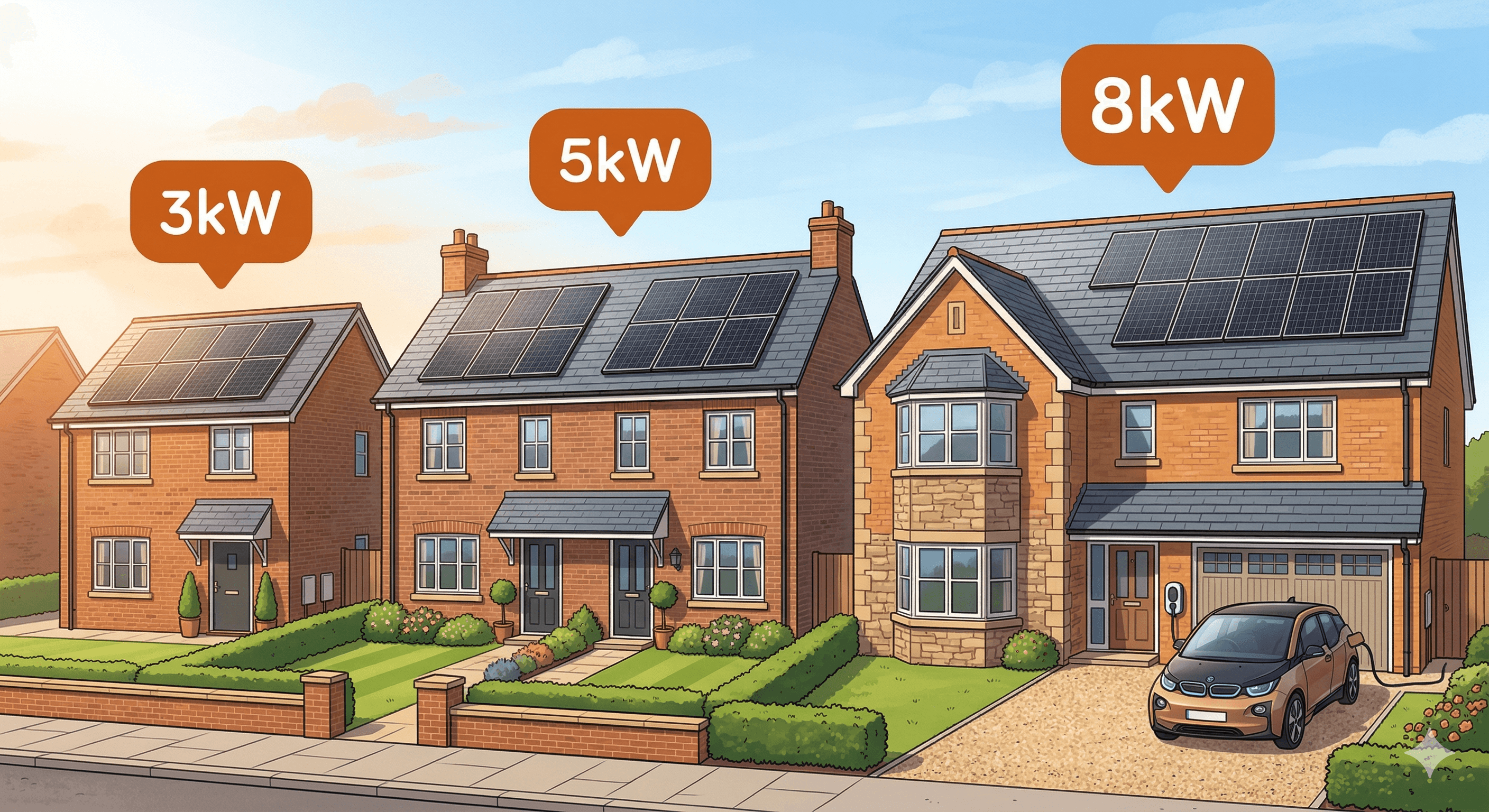
- Small household (1–2 people, low usage): 6–8 panels, roughly 3–4kW. Suits flats and smaller homes.
- Medium household (3–4 people): 8–12 panels, roughly 4–6kW. The most common system size we install — covers most family homes. Use our calculator to see what this means for your bills.
- Large household (4+ people, high usage, or EV charging): 12–16 panels, roughly 6–8kW. Best if you're running a heat pump or charging an electric car.
Panel wattage makes a big difference
A 4kW system with older 350W panels needs about 12 panels. The same system with modern 515W panels? Just 8. Fewer panels, same output, less roof space used.
Will they fit on your roof?
Each panel takes up roughly 1.9 square metres (about 1.7m × 1.1m). A 10-panel system needs around 19 square metres of usable roof.
South-facing is ideal, but east and west-facing roofs still hit 85–90% of that output. Your installer will survey the roof and work out exactly what fits where.
Adding a battery? Go slightly bigger
Without a battery, surplus electricity goes to the grid for a few pence per kWh. With a battery, you store it and use it in the evening.
To actually fill a battery, you'll want two or three extra panels beyond what your usage alone would suggest.
Don't oversize it
A system matched to your actual usage gives the best return. Panels that offset grid electricity save you 24–28p per kWh. Panels that just export surplus earn you far less. The sweet spot is covering your daytime usage (and charging your battery) without producing more than you can use or store. For a deeper look at the financials, see our guide on how much solar panels cost.
Every home is different. Your bills, roof shape, shading, and future plans all matter. If you'd like to find out what the right system looks like for yours, get in touch for a free, no-obligation quote.