
TL;DR
Yes — most UK homeowners save 60–80% on electricity bills. A typical system costs £10,000–£20,000 (0% VAT until 2027), pays for itself in about 7 years, then generates near-free electricity for another 18+ years.
Yes. Properly, genuinely, noticeably yes.
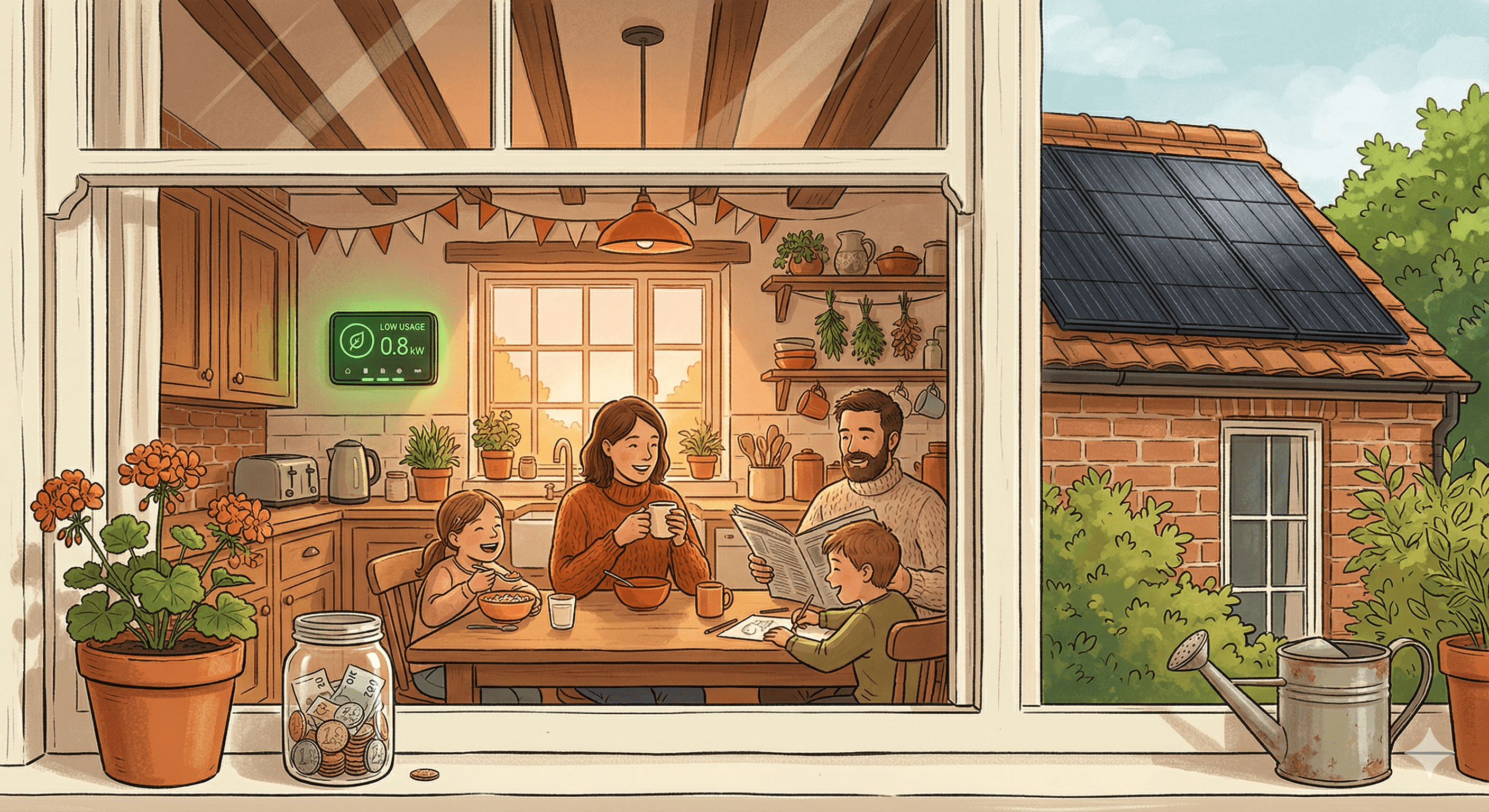
Most households we install for see electricity bills drop by 60–80%. Not in some distant future — right now, month after month. Spending £2,000 a year on electricity? That's £1,200 to £1,600 staying in your bank account instead of your energy supplier's.
What does it cost?
A typical residential install runs between £10,000 and £20,000, depending on system size, battery storage, and your roof.
There's currently 0% VAT on domestic solar installations until at least March 2027. That alone saves you hundreds.
Modern N-type panels rated at 515W+ generate far more per square metre than older models too. Fewer panels, same output, lower cost.
The bill savings
A well-sized system on a south-facing roof cuts your electricity bill by 60–80%. East or west-facing? Still 50–70%.
The trick is self-consumption — using what your panels generate rather than exporting it. Working from home? Running the washing machine midday? Charging an EV? Essentially free electricity.
Getting paid for what you export
Any surplus goes back to the grid through the Smart Export Guarantee (SEG). Your supplier pays you between 4p and 15p per kWh exported. Won't make you rich, but it adds up to a few hundred quid a year.
Make sure your installer is MCS-certified — that's a requirement for SEG eligibility.
Batteries change everything
Without a battery, electricity generated while you're out goes to the grid at SEG rates. With one, you store it and use it in the evening instead of buying at full whack.
A battery pushes self-consumption from 40–50% up to 70–80%. They cost £3,000 to £6,000, but the extra savings mean the battery pays for itself within the overall payback window.
The payback
On average, a UK solar system pays for itself in about 7 years. Quality panels carry 25-year warranties, so that's roughly 18 years of near-free electricity after payback.
Every time energy prices rise, your payback gets shorter and your lifetime savings get bigger. Solar is a proper hedge against rising bills.
Does your roof suit solar?
A few things matter:
- Direction. South-facing is best. East and west work well too. North-facing? Generally a no. See our full roof suitability guide.
- Pitch. 30–35 degrees is ideal, but 20–50 works fine. Flat roofs can use tilt frames.
- Shading. Trees, chimneys, and neighbouring buildings casting shadows will cut output. A good installer designs around this.
- Usage. Shift heavy loads to daylight hours — dishwasher, laundry, EV charging — and you'll squeeze out more savings.
Worth it?
For most UK homeowners, comfortably. The maths works, the tech is proven, and 0% VAT makes the entry point the best it's been. If you're curious what it'd look like on your roof, try our savings calculator or get a free quote based on your actual property.