
TL;DR
Most UK roofs are suitable. South-facing is ideal, east and west work well too — only north-facing is a no. You need about 20–25 square metres of clear space for a typical system. Listed buildings may need planning permission.
Most UK roofs work just fine for solar panels. If yours gets decent daylight and isn't falling apart, you're probably in good shape. Here's what actually matters.
Roof direction
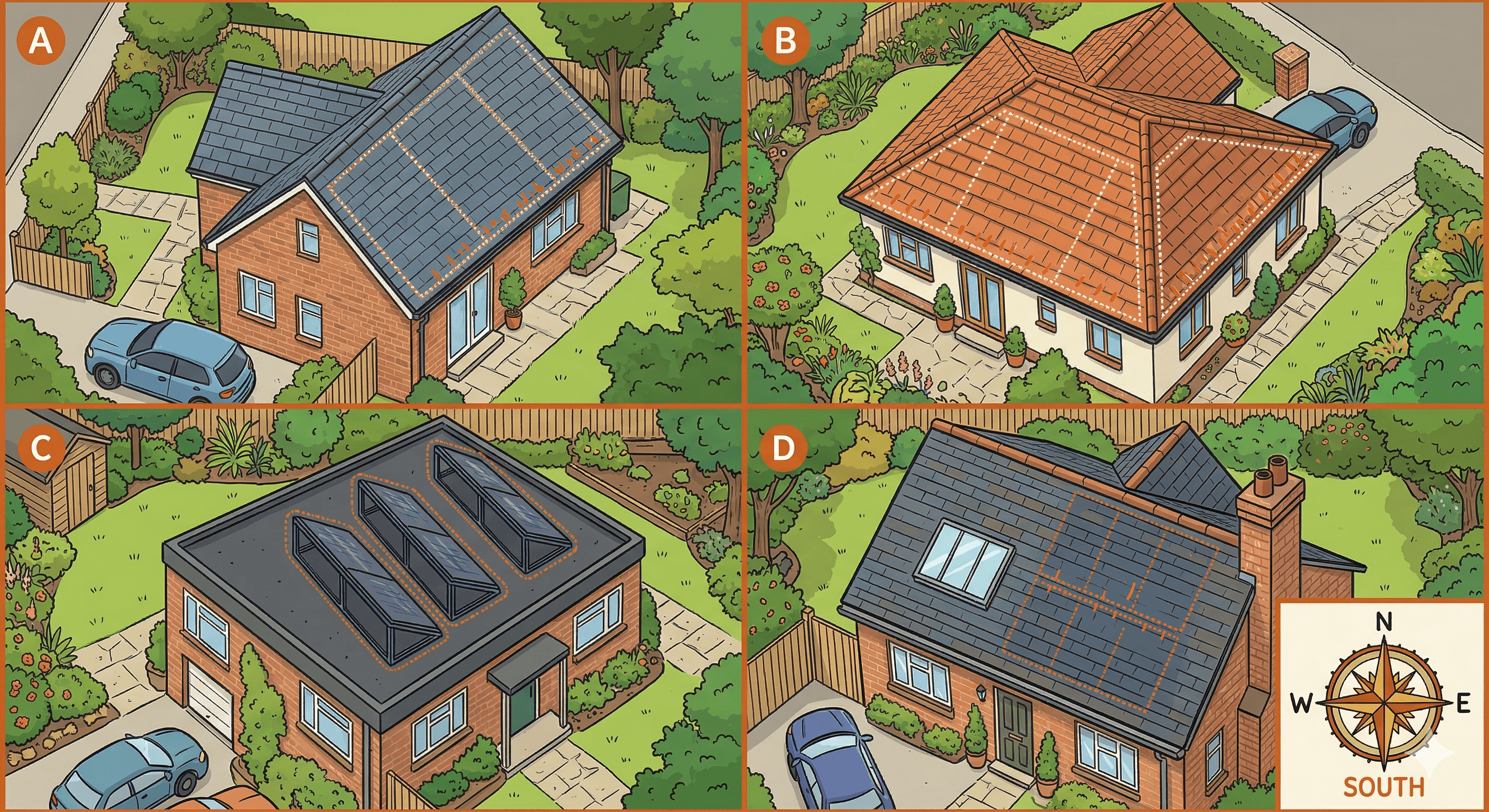
This is the biggest factor. South-facing roofs produce the most electricity, but east and west-facing roofs still generate around 80–85% of that, as the Energy Saving Trust confirms — plenty for serious savings. Got space on both east and west sides? Panels on both spread your generation from morning through evening.
North-facing is the one to avoid. Too little direct sunlight to make the numbers work.
Roof pitch
The sweet spot is 30–40 degrees, and most UK pitched roofs fall right in that range. Steeper or shallower? Still works — the drop in output is marginal.
Flat roofs are fine too. Panels go on angled frames that tilt them to the right pitch. It costs a touch more, but it's a well-proven setup.
Shading
Trees, chimneys, neighbouring buildings — anything casting shadows on your panels will cut their output. Even partial shade on one panel can drag down the whole string.
The fix: panel-level optimisers or microinverters let each panel work independently, so one shaded panel won't hold back the rest. Heavy shading across most of the roof is a different matter, though. If tall trees or buildings block sunlight for large parts of the day, the returns won't stack up.
Roof condition
Solar panels last 25+ years. Your roof needs to match. Cracked tiles, perishing felt, or a reroof due soon? Sort that first. Removing panels to reroof and then refitting them is expensive and disruptive.
Your installer will check the roof can handle the weight. Modern panels are lighter than you'd think — roughly 250–350kg spread across a large area.
Roof material
Concrete tiles, clay tiles, slate — all straightforward. Flat roofs (felt, fibreglass, rubber) work with frame systems. Metal and standing seam roofs have clamp-based mounts.
The main exception is thatch. Fire risk and structural concerns rule it out in most cases. Ground-mounted panels may be an alternative.
How much space?
A typical 4kW system needs around 20–25 square metres of clear roof — roughly eight to ten panels. Limited space? A smaller system still makes a real dent in your bills. See our guide on how many solar panels you actually need for sizing by household and usage.
Listed buildings and conservation areas
You may need planning permission if your home is listed or in a conservation area. It's not an automatic no — plenty of these properties have panels. We've installed on slate roofs in Surrey's conservation areas, for example.
Get a site survey
Every roof is different. The pitch, the shading from that sycamore in October, how your house sits relative to the neighbours — these things need a proper look. An MCS-certified installer will assess your roof, measure the space, check for shading, and tell you exactly what to expect. Book a free site survey — it's the only way to know for certain.